
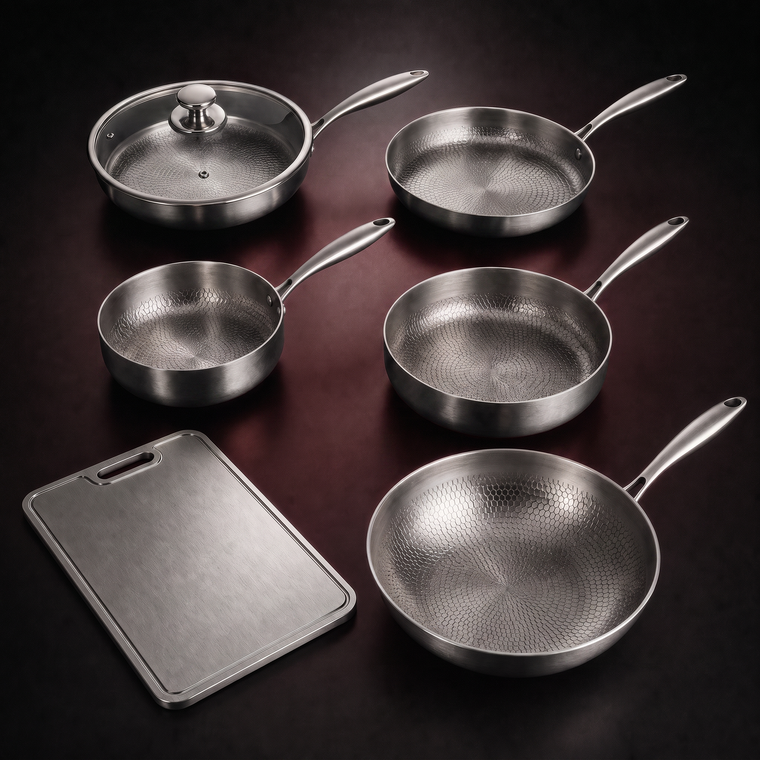

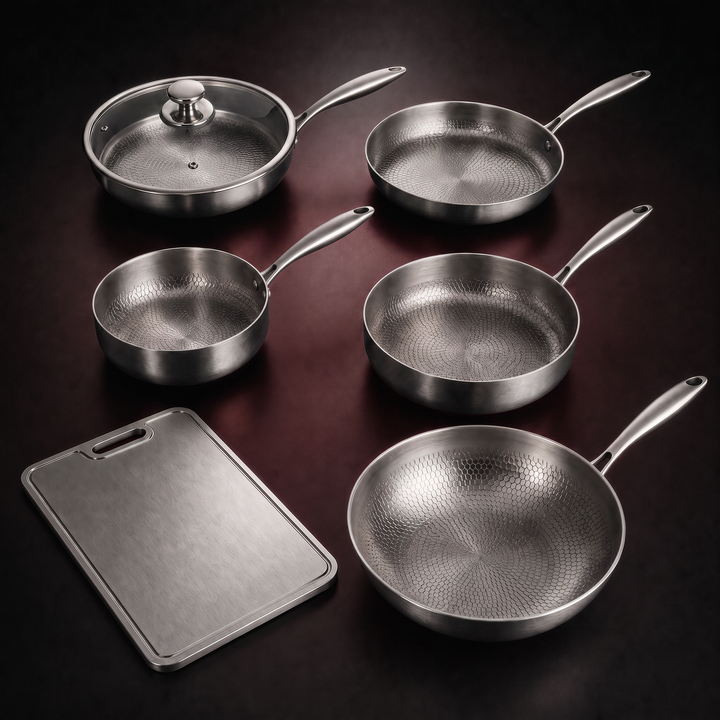


Cooking with uncoated titanium
Titanium behaves differently from a coated pan, in a good way, once you know the rules. Four short guides that cover everything from your first cook to the next twenty five years. They are written by the chef who designed these pans, so they are the same instructions he gives in his own kitchen.
01 · First use
What to do in the first ten minutes, before you cook anything.
02 · Heat control
The single skill that decides whether food sticks or slides.
03 · Cleaning
Two minutes at the sink, and what never to use.
04 · Long term care
Storage, stacking, discolouration and the 25 year warranty.
01 · Your first cook
Unbox, and before anything else: wash the pan in warm soapy water, rinse and dry it fully. That removes any residue from manufacturing and handling.
- Dry the pan completely. Water left on the surface will spit the moment oil goes in.
- Preheat on medium for 90 seconds. Not high. Titanium holds heat well, so it needs less input than you are used to.
- Test it. Flick two drops of water in. They should skitter across the surface as a bead. If they hiss and vanish instantly, the pan is too hot, so pull it off the heat for thirty seconds.
- Add a thin layer of oil and swirl to coat. A neutral oil with a high smoke point works best: sunflower, rapeseed, grapeseed or refined olive.
- Add your food and leave it alone for the first minute. Protein releases itself once it has seared, and forcing it early is what tears it.
The one habit to build: hot pan, then cold oil, then food. Nearly every “my titanium pan sticks” message we get traces back to food going into a pan that was never properly preheated.
02 · Heat control
An uncoated pan rewards patience and punishes impatience. Titanium conducts differently from aluminium. It takes a little longer to come up to temperature and then holds that temperature far more steadily.
| What you are cooking | Setting | Notes |
|---|---|---|
| Eggs, pancakes, delicate fish | Low to medium low | Preheat 2 minutes, use butter or oil generously. |
| Vegetables, mushrooms, onions | Medium | Do not crowd the pan. Steam is the enemy of a sear. |
| Steak, chops, searing | Medium high | Preheat 3 minutes. Dry the meat first. Do not move it. |
| Sauces, reductions, braises | Low to medium | Excellent here, because the even heat prevents hot spots. |
| Oven finishing | Up to 260 °C / 500 °F | Oven safe. Use a cloth or mitt, the handle gets hot. |
Maximum heat on an empty pan is the only thing that will genuinely harm titanium. Do not preheat on full for minutes at a time, and never leave an empty pan on a live burner.
03 · Cleaning
Do
- Let the pan cool before it meets water
- Hand wash with warm water, washing up liquid and a soft sponge
- Soak stubborn residue for ten minutes first
- Use a baking soda paste for burnt on marks
- Dry immediately after washing
Do not
- Plunge a hot pan into cold water, because thermal shock warps any metal
- Use oven cleaner, bleach or caustic products
- Scrub with steel wool loaded with harsh chemicals
- Leave the pan soaking overnight
- Put it away wet
Our pans are technically dishwasher safe, but detergent tablets are aggressive and will dull the finish over years. Hand washing takes two minutes and is what we recommend.
04 · Long term care
Discolouration is normal
Titanium can develop a faint golden, bronze or bluish tint where it gets hottest. This is a harmless oxide layer, not damage or a coating breaking down. Many cooks like it. If you would rather remove it, a little white vinegar or a baking soda paste will lift most of it.
Storage
Store dry. If you stack pans, slip a tea towel or pan protector between them, not because titanium scratches easily, but because the pan below it might not be titanium.
The surface improves
Unlike a coating, which is at its best on day one and degrades from there, an uncoated hammered surface gets better with use as microscopic amounts of polymerised oil build into the texture. A pan two years in outperforms a new one.
Your 25 year warranty
Every Forgewell piece is covered for 25 years against defects in materials and workmanship. Warping under normal use, a handle that fails, a flaw in the metal: we repair or replace it. Send your order number and a photo to info@forgewellcookware.com. Normal wear, discolouration, misuse and accidental damage are not covered.
Still have a question? Our support team cooks on this stuff too. Email info@forgewellcookware.com, available 24/7 and usually answered within four hours, or browse the FAQ. Curious where these pans came from? Read our story.